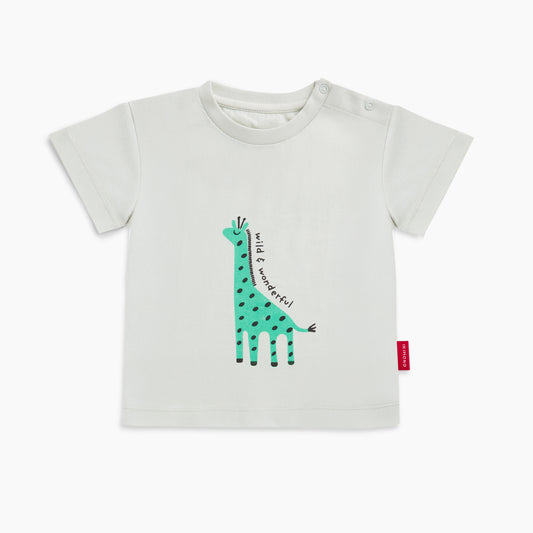
What Baby Clothes Are Best for Kids with Eczema?
Share
A parent's guide to fabric choices that soothe sensitive skin
If your baby has eczema, you know the heartbreak: red, irritated patches that keep them (and you) awake at night. You've probably tried every cream, eliminated foods, and controlled humidity. But have you examined what's touching their skin 24/7?
Clothing is often the overlooked trigger—and the easiest one to fix.
The Short Answer
For eczema-prone babies, choose GOTS-certified organic cotton with smooth inner seams and tagless labels. Avoid synthetic fabrics, wool, and clothes with screen-printed graphics that crack and irritate. The fabric should be pre-washed, have a soft hand-feel without chemical softeners, and feature breathable construction like single-layer cotton or French Terry to prevent sweat-triggered flare-ups.
Why Fabric Matters for Eczema
Eczema (atopic dermatitis) is essentially a compromised skin barrier. Think of healthy skin as a brick wall—eczema skin has missing bricks and crumbling mortar.
This means:
• Irritants penetrate more easily
• Moisture escapes faster (leading to dryness)
• Friction causes more damage
• Temperature changes trigger reactions
Every fabric choice either supports that fragile barrier or attacks itThe 5 Fabric Rules for Eczema Babies
1. Choose Organic Over Conventional Cotton
Conventional cotton is processed with:
• Formaldehyde (wrinkle-resistance)
• Chlorine bleach
• Chemical dyes and finishes
Even after washing, residues remain. GOTS-certified organic cotton prohibits these chemicals entirely, and requires pH levels that match baby skin (4.0-7.5).
2. Look for Flat or External Seams
Here's something most parents don't realize: 23% of clothing-related skin irritation in sensitive children comes from internal labels and seams.
The solution:
• Flat-lock seams: Sewn flush against fabric, no raised ridge
• External seams: Stitching on the outside where it can't rub
• Tagless labels: Printed directly on fabric, nothing to scratch
If you're dressing your baby inside-out for comfort, the garment quality is the problem.
3. Avoid Cracked Prints
Those cute screen-printed graphics? They're often made with plastisol (PVC-based ink) that:
• Cracks and peels after washing
• Creates rough, scratchy surfaces
• Contains phthalates and heavy metals
Water-based prints stay soft wash after wash. Look for this specifically if buying printed babywear.
4. Skip Wool and Synthetics
Wool: High eczema risk — microscopic fibers irritate broken skin
Polyester: High risk — traps heat, causes sweating
Nylon: High risk — static, poor breathability
Fleece: Medium-High risk — synthetic heat trap
Organic Cotton: Low risk — breathable, soft, chemical-free
5. Prioritize Breathability
Sweating is a major eczema trigger. When sweat sits on skin, salt crystals irritate the compromised barrier. Breathable fabrics like French Terry:
• Wick moisture away
• Allow evaporation
• Prevent heat buildup
---
The "Inside-Out" Test
Before buying, do this simple check:
1. Turn the garment inside-out
2. Run your finger along every seam
3. Feel for scratchy labels, raised stitching, or rough textures
4. If anything catches or feels abrasive, skip it
Your baby's skin feels everything more intensely than yours does.
---
Care Tips for Eczema-Friendly Clothes
Even good fabrics can become irritants if washed wrong:
• Detergent: Use fragrance-free, dye-free formulas (the fewer ingredients, the better)
• Rinse cycle: Run an extra rinse to remove all detergent residue
• Fabric softener: Skip it—coats fibers and can irritate
• Dryer sheets: Avoid—fragrance and chemical coating
• New clothes: Always wash before first wear
---
The Bottom Line
Eczema management isn't just about creams and triggers—it's about reducing daily friction and irritation. Clothing is the longest-contact item on your baby's skin. Make it work FOR the skin barrier, not against it.
Shopping checklist for eczema babies:
• GOTS-certified organic cotton
• Flat or external seams
• Tagless design
• Water-based prints only
• Breathable construction (French Terry or jersey)
---
Designed for Sensitive Skin
Every Ikimono piece features flat seams, tagless labels, and water-based prints—because we believe all babies deserve itch-free comfort.