Why Does My Baby Get Rashes from Clothes? A Fabric Guide for Worried Parents
Share
Why Baby Skin Reacts Differently to Fabric
Your baby isn't being "fussy." Their skin is genuinely different from yours.
A newborn's skin barrier — the outermost layer that protects against irritants — doesn't fully mature until around age 2. During this window, chemicals that sit harmlessly on your skin can penetrate your baby's and trigger reactions ranging from mild redness to full contact dermatitis.
Here's what's actually happening when your baby breaks out after wearing certain clothes:
The Chemical Layer You Can't See
Most conventional baby clothes go through **15-20 chemical processes** between raw fiber and finished garment. These include:
- Formaldehyde-based resins — Applied as "wrinkle-resistant" or "easy-care" finishes. Found in approximately 8% of conventional babywear. The WHO classifies formaldehyde as a Group 1 carcinogen.
- AZO dyes — Cheap synthetic dyes that can release aromatic amines on contact with sweat. Banned in the EU for baby clothing but still common in unregulated imports.
- Optical brighteners — Chemicals that make whites appear "whiter than white." These stay in fabric even after washing and can cause UV-activated skin reactions.
- Softening agents — Ironically, the chemical softeners applied to make cheap fabric feel soft can irritate sensitive skin more than naturally soft organic cotton.
The Heat Trap Problem
Polyester and poly-cotton blends — found in most budget babywear — create a micro-climate against your baby's skin:
1. Synthetic fibers don't absorb moisture (polyester absorbs only 0.4% of its weight)
2. Sweat sits on the skin surface instead of being wicked away
3. Trapped moisture + body heat = bacterial growth
4. Bacteria + chemical residues + friction = rash
This is why your baby might be fine in the morning but rashy by afternoon — the sweat buildup takes a few hours to trigger the reaction.
---
The 4 Types of Clothing-Related Rashes
Not all fabric rashes look the same. Knowing the type helps you find the right fix:
1. Contact Dermatitis (Chemical)
- **Looks like: Red, itchy patches where fabric touches skin — often wrists, neck, waistband
- **Cause:** Chemical finishes (formaldehyde, dyes) reacting with skin
- **Fix:** Switch to GOTS-certified clothes (zero prohibited chemicals)
- **Timeline:** Appears 12-48 hours after wearing
2. Heat Rash (Miliaria)
- **Looks like:** Tiny red bumps, often in skin folds and covered areas
- **Cause:** Blocked sweat ducts from non-breathable fabric
- **Fix:** Use breathable organic cotton or French Terry; dress in layers you can remove
- **Timeline:** Appears within hours in warm conditions
3. Friction Rash
- **Looks like:** Red, raw-looking patches at seam lines, tag areas, or elastic edges
- **Cause:** Rough internal seams, sewn-in tags, or tight elastic rubbing against skin
- **Fix:** Choose tagless designs with flat or external seams
- **Timeline:** Worsens throughout the day with movement
4. Eczema Flare-Up (Atopic Dermatitis)
- **Looks like:** Dry, scaly, intensely itchy patches — often on cheeks, elbows, behind knees
- **Cause:** Fabric acts as a trigger (not the root cause) — especially synthetics and wool
- **Fix:** Organic cotton with smooth finishes + consult your pediatric dermatologist
- **Timeline:** Can take days to appear, weeks to resolve
> **Important:** If your baby has persistent or worsening rashes, always consult your pediatrician. Fabric is one piece of the puzzle — allergies, detergents, and environmental factors also play a role.
---
What to Look for When Buying Baby Clothes
The Fabric Check
| ✅ Safe Choice | ❌ Common Irritant |
| 100% organic cotton | Polyester or poly-cotton blends |
| GOTS-certified fabrics | "Organic" without certification |
| French Terry (looped back for breathability) | Fleece (traps heat) |
| Natural or low-impact dyes | Bright neon colors (high dye concentration) |
| Pre-washed fabric | Stiff, "new smell" fabric |
The Construction Check
| ✅ Skin-Friendly | ❌ Irritation Risk |
|---|---|
| Flat seams or external seams | Internal raised seams |
| Tagless heat-transfer labels | Sewn-in woven tags |
| Nickel-free snaps | Metal buttons touching skin |
| Covered elastic (encased) | Exposed elastic at waist/legs |
| Water-based prints | Plastisol/PVC prints (crack & scratch) |
The Certification Check
Not all "organic" claims are equal. Here's the hierarchy:
1. GOTS (Global Organic Textile Standard) — Gold standard. Covers farming, processing, manufacturing, AND labor conditions. Every chemical used must be approved. This is what Ikimono uses.
2. OEKO-TEX Standard 100 — Tests the final product for harmful substances. Good, but doesn't cover farming or manufacturing processes.
3. "100% Organic Cotton" (no certification) — May mean the raw cotton was organic, but factory processes could still add chemicals.
4. "Natural" or "Eco-friendly" — Marketing terms with no regulatory definition. Meaningless without a third-party certification.
---
The Wash Factor: Your Laundry Might Be the Problem
Sometimes it's not the clothes — it's how you wash them:
- Switch detergents: Use fragrance-free, plant-based laundry detergent. Fragrances are the #1 cause of detergent-related skin reactions.
- Double rinse: Run an extra rinse cycle to remove all detergent residue.
- Skip fabric softener: Chemical softeners coat fibers with a waxy layer that can irritate. Organic cotton naturally softens with each wash — no softener needed.
- Wash new clothes first: Always wash new garments before your baby wears them. This removes factory-applied finishing chemicals.
- Vinegar hack: A tablespoon of white vinegar in the rinse cycle neutralises detergent residue and naturally softens fabric.
---
When to See a Doctor
Fabric adjustments help most mild rashes, but see your pediatrician if:
- The rash doesn't improve after 3-5 days of switching fabrics and detergents
- There's oozing, crusting, or signs of infection
- Your baby seems in pain or has trouble sleeping because of itching
- The rash spreads to areas not in contact with clothing
- You suspect an allergic reaction (swelling, breathing changes)
---
The Ikimono Approach
We designed our basics specifically for reactive skin. Every Ikimono garment features:
- 100% GOTS-certified organic cotton - Zero prohibited chemicals from farm to finished product
- Flat seams and tagless labels — No friction points against sensitive skin
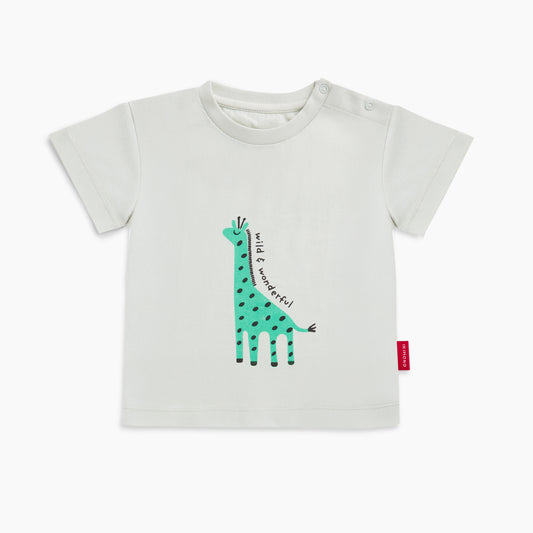
- Water-based illustrations — Our playful animal prints stay soft wash after wash (no cracking plastisol)
- Pre-washed, pre-shrunk fabric — Ready to wear from day one, with finishing chemicals already rinsed out
- Nickel-free snaps — No metal allergy risk
---
Related Reading